



Introduction
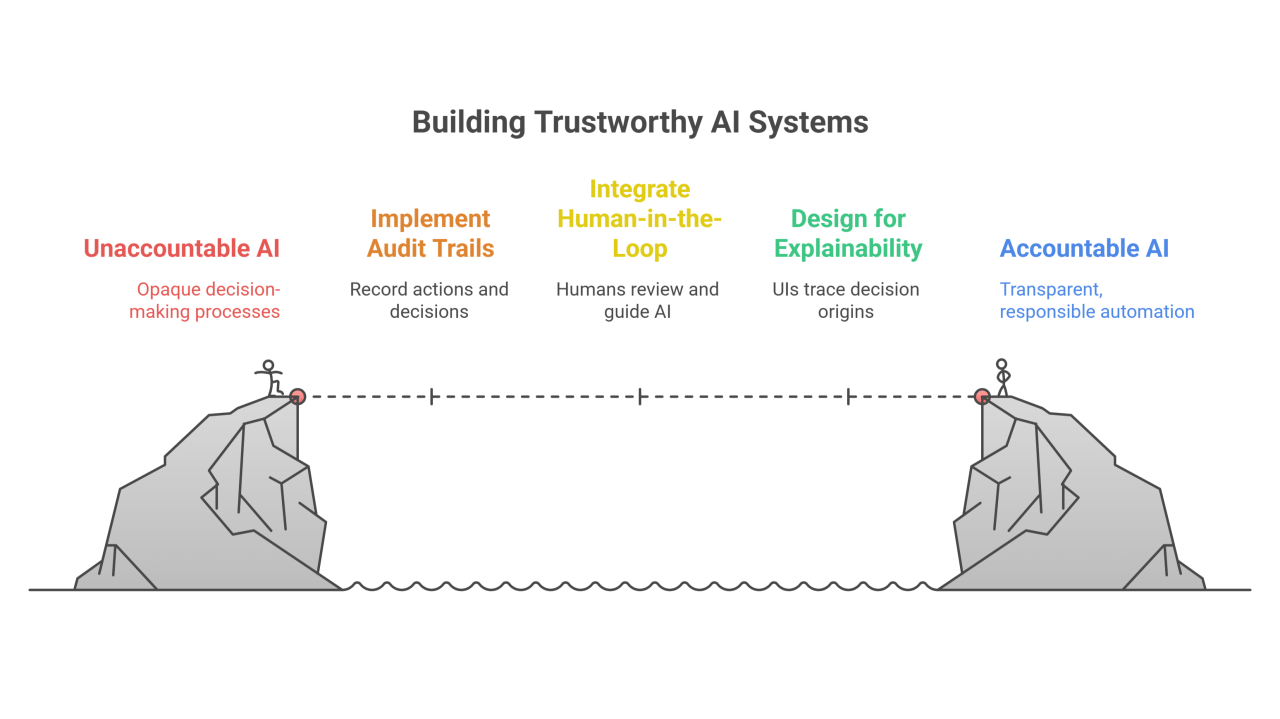
Most organizations deploying AI in a regulated decision - credit scoring, employment screening, insurance underwriting, fraud flagging - already log something. A timestamp, an input, an output, maybe a model version number. When a regulator or an affected individual challenges that decision months later, that log is rarely enough. The question that actually gets asked is not "what did the model output" but "can you prove the model that produced this decision was operating on the data it was supposed to be operating on, unaltered, at the time it made this call." Most existing logging infrastructure was never built to answer that.
What a Regulator-Grade Audit Trail Actually Requires
The decision, the model version, and the data must be linked - permanently
A defensible audit trail connects three things at the moment of decision: the specific input and output, the exact model version that produced it (not a rolling label like "production" that silently points to different weights over time), and the specific state of any reference or training data the model relied on. If any one of these three can drift independently of the others in the historical record, the chain breaks, and a challenged decision cannot be reconstructed with confidence.
The record has to be tamper-evident, not just append-only
Append-only logging is a good baseline but does not, by itself, prove nothing was altered - it only makes alteration harder to do casually. A regulator-grade trail requires that any modification to the historical record, however it occurred, is cryptographically detectable. This is the difference between a log an engineer trusts because they built it, and a log an external auditor can independently verify without trusting the organization's word for it.
Retention has to outlast the challenge window, not the model's lifecycle
Model versions get deprecated and retired on an engineering timeline. Regulatory and legal challenge windows do not follow that schedule - an employment decision or a credit denial can be contested well after the model that made it has been replaced. An audit trail architecture that ties record retention to model lifecycle rather than to the applicable legal challenge period will have gaps exactly where they matter most.
Where This Connects to Data Provenance, Not Just Logging
An audit trail that faithfully records a decision but cannot independently verify the integrity of the data behind it has only solved half the problem. If the training or reference data itself could have been altered without detection, then even a perfectly logged decision trail is built on an unverifiable foundation. The two problems - decision logging and data integrity - have to be solved together, anchored to the same cryptographic root, or the audit trail's strongest claim collapses into "we didn't notice anything wrong," which is not the same as proof.
- Bind every decision record to a specific, immutable model version - never a rolling label
- Anchor the reference and training data state alongside the decision, not in a separate, disconnected system
- Make any alteration to the historical record cryptographically detectable, not merely append-only
- Set retention against the applicable legal challenge window, not the model's deployment lifecycle
A decision log that can't independently prove the integrity of the data behind it isn't an audit trail - it's a claim. See how ROOTKey anchors decisions, model versions, and data state to a single, verifiable record.
Recibe ideas sobre ciber-resiliencia en tu correo
Orientación práctica y lista para auditorías sobre integridad de datos, cumplimiento y continuidad, según publicamos.