

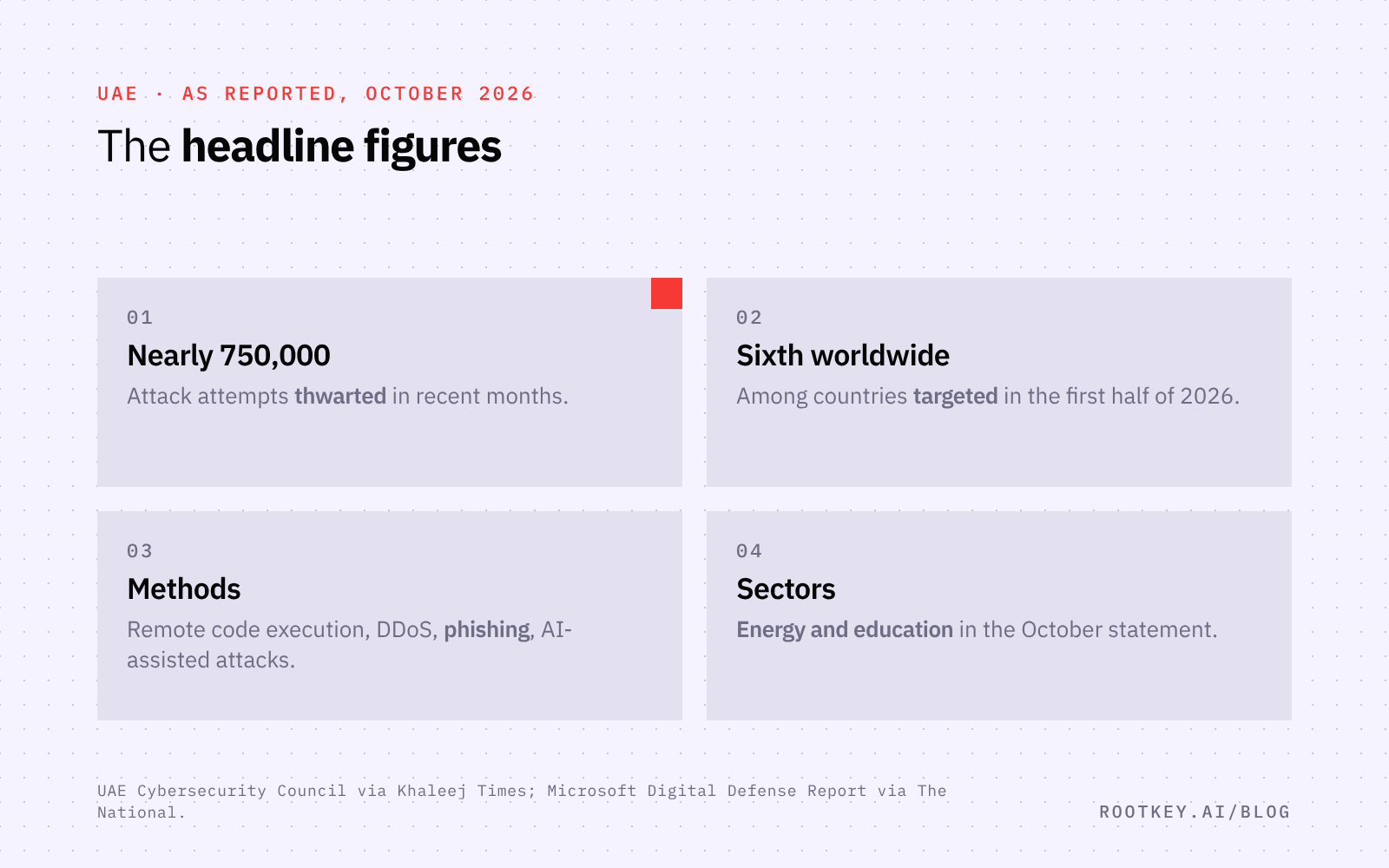
In October 2026, the UAE Cybersecurity Council said national teams had thwarted nearly 750,000 cyberattack attempts in recent months, aimed particularly at the energy and education sectors, according to Khaleej Times. Weeks earlier, Microsoft's Digital Defense Report ranked the UAE sixth worldwide among countries targeted by cyberattacks in the first half of 2026, as The National reported. Both figures describe pressure on the front door. Neither tells you what happened to the data behind the doors that opened.
What the figures say
- Volume. Nearly 750,000 attempts, with no breakdown by period or outcome. The Council itself noted that more attempts do not necessarily mean more successful breaches.
- Methods. Remote code execution, denial of service, phishing and attacks that use AI, according to the Council's statement.
- Targets. Energy and education in the October statement; aviation, energy and education in an August statement.
- Who. Microsoft's report placed the UAE third among countries targeted by Iran-linked actors, with known vulnerabilities and weak authentication among the ways in.
What they do not tell you
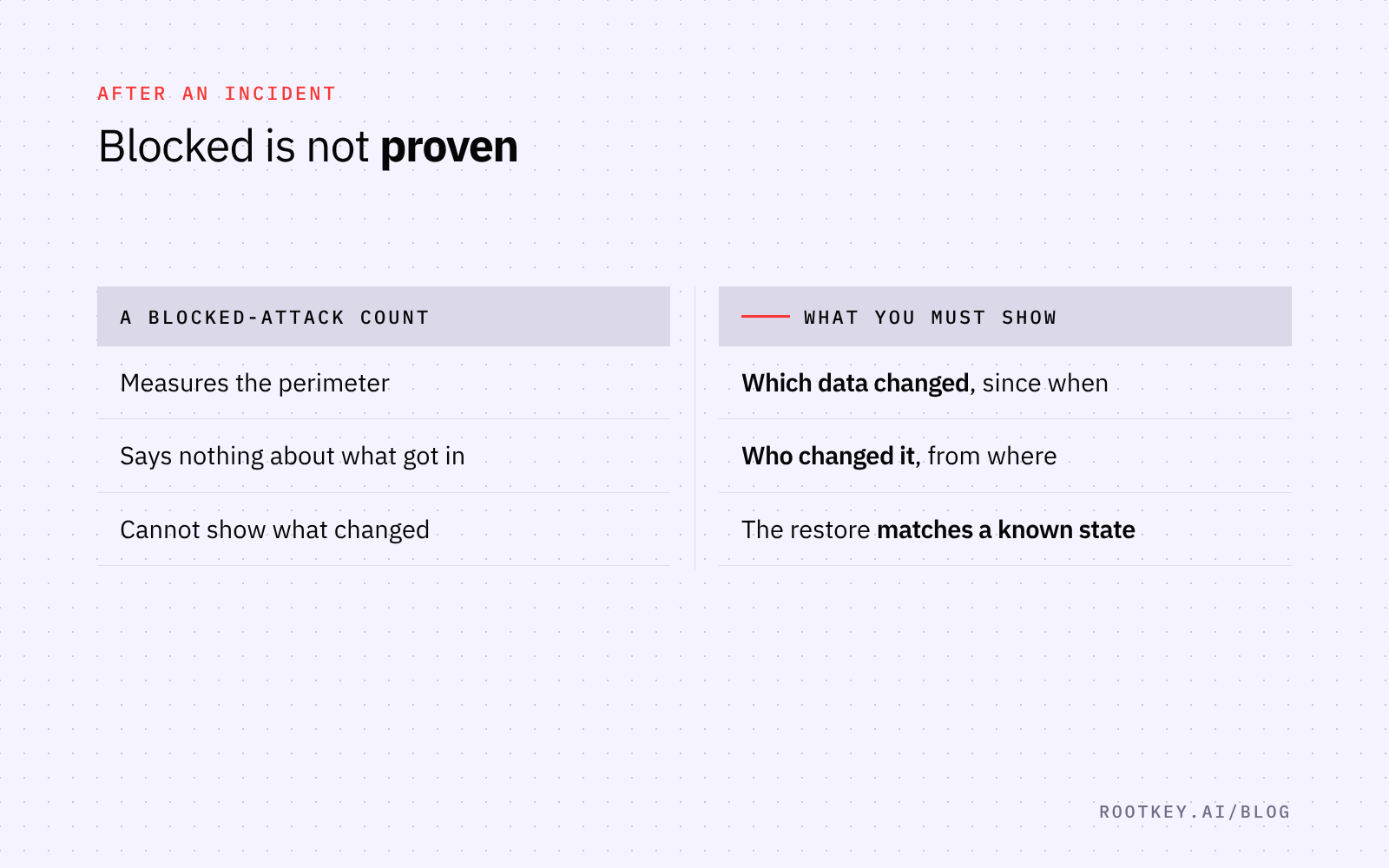
A count of blocked attempts measures defence at the perimeter. It says nothing about the attempts that were not blocked, or about the ones that succeeded quietly. The attacks that matter most after the fact are often the least visible: credentials used to change records, a document edited before it was exfiltrated, a configuration altered weeks before an outage.
For a board or a regulator, the question after an incident is not how many attacks were stopped. It is which data changed, since when, and whether what you restored is right.
Questions to put to your own numbers
- Of the alerts that were not blocked, which touched data, and how do you know?
- Can you list, for a critical system, every record that changed in the last 30 days and who changed it?
- If you restored that system today, could you show the restored data matches a known-good state?
- Is the reference you would compare against stored outside the environment an attacker could reach?
For the regulatory side in the region, see SDAIA's Draft PDPL Amendments and UAE PDPL and the ADGM Cyber Risk Framework.
Where ROOTKey fits
ROOTKey seals a fingerprint of files and records in an independent registry, outside your systems and ours, and shows what changed, who changed it, when and from where. It turns the questions above into answers you can show, and restores the last verified version when something was altered. ROOTKey deploys as SaaS, in a private cloud or on-premise.