
Since 11 September 2026, Article 14 of the EU Cyber Resilience Act (CRA) has required manufacturers of products with digital elements to report actively exploited vulnerabilities and severe incidents that affect the security of their products. Reports go to the CSIRT designated as coordinator, through ENISA's Single Reporting Platform, in three stages: an early warning within 24 hours of becoming aware, a notification within 72 hours, and a final report. Most of the CRA applies from 11 December 2027, but the reporting duty is already live, including for products already on the market.
What counts as reportable
- An actively exploited vulnerability: one with reliable evidence that a malicious actor has exploited it. A flaw you fixed before anyone used it goes through your normal vulnerability handling, not this channel.
- A severe incident: one that affects, or could affect, the product's ability to protect the availability, authenticity, integrity or confidentiality of data or functions, or that has led, or could lead, to malicious code being introduced or run.
The three deadlines
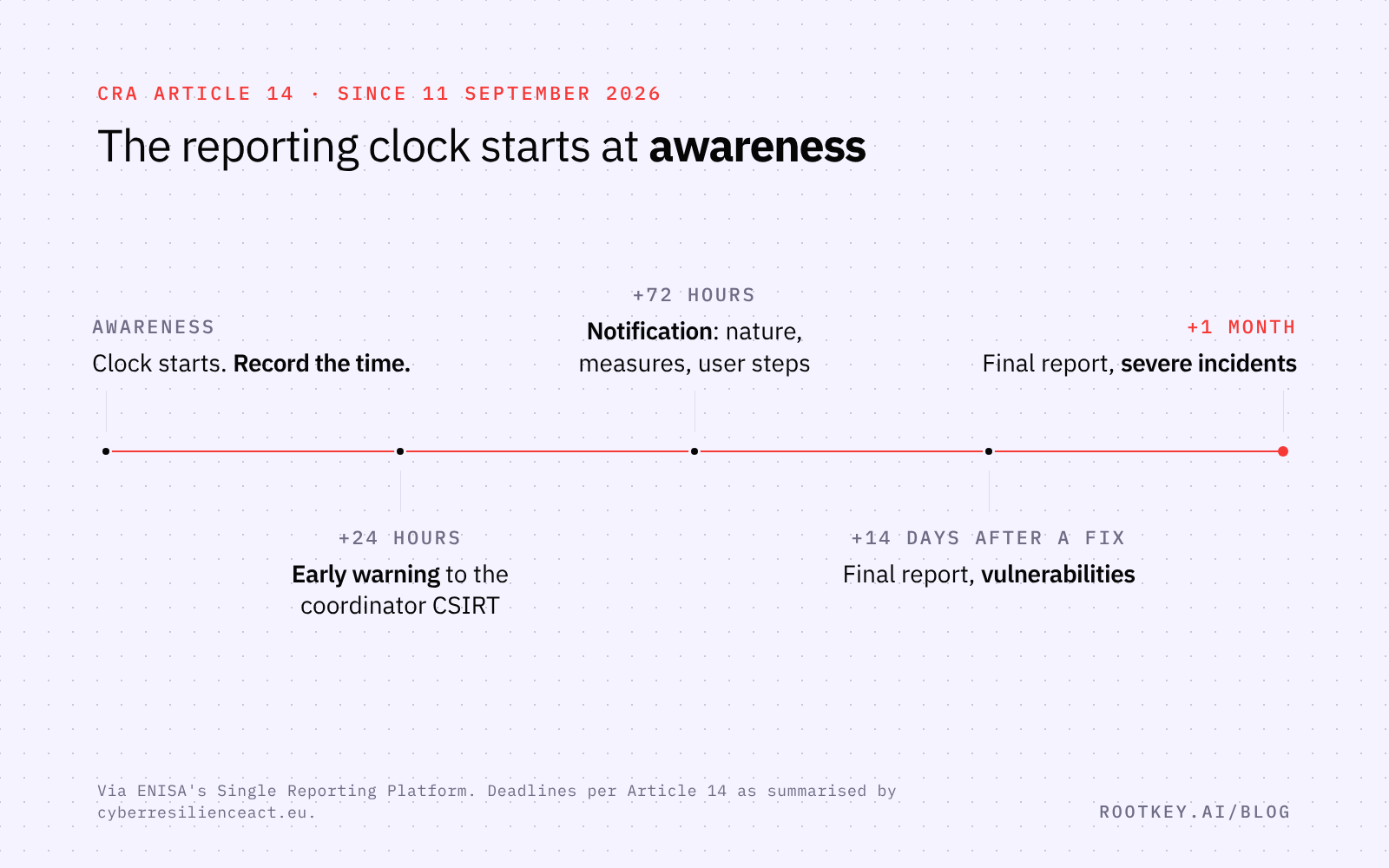
The early warning is short: who you are, which product, what kind of event and, for incidents, whether malicious action is suspected. The 72-hour notification adds the nature of the vulnerability or incident, the measures taken and the measures users can take. The final report, due 14 days after a corrective measure is available for a vulnerability, or one month after the notification for an incident, adds a full description, severity and impact.
These field lists follow cyberresilienceact.eu's reporting guide; check the platform's own forms before you file.
The clock starts at awareness. Record it.
Every deadline counts from the moment you became aware, and at launch the platform did not record that moment for vulnerabilities, according to the same guide. Keep your own timestamped record. When the coordinator or a market surveillance authority later asks when you knew, a record made at the time, and protected from later edits, is a far better answer than a reconstruction.
Where the evidence comes from
An integrity question sits inside many of these reports. Was the product's code or configuration changed? Was a release artifact replaced? Are customers running the build you shipped? October's malicious LiteLLM release, pushed through the project's own release workflow, is the kind of supply-chain event manufacturers now need to be able to describe within hours; we covered it in October 2026 in Review.
What to do this month
- Identify your coordinator CSIRT: the one in the member state of your main establishment in the EU.
- Set up access to ENISA's Single Reporting Platform and walk through the forms before you need them.
- Write down your awareness rule: who decides that a vulnerability is actively exploited, and how that time is recorded.
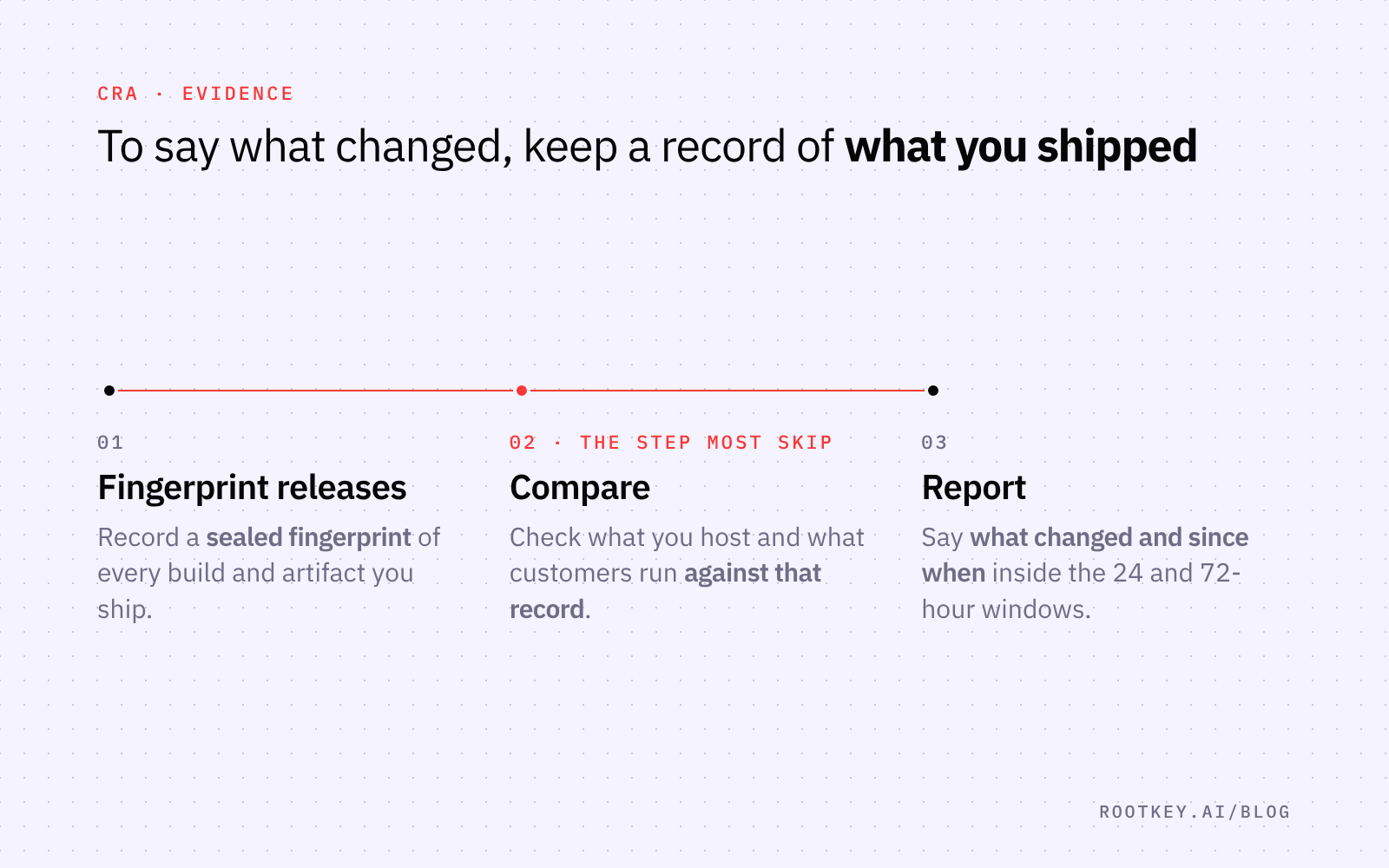
- Keep a fingerprint of every release so you can show what you shipped and spot what changed.
- Prepare the user notice, with mitigation steps you can publish quickly.
Where ROOTKey fits
ROOTKey seals a fingerprint of files, such as release artifacts kept in Amazon S3 or Cloudflare R2, in an independent registry, and shows what changed, when and from where. For a CRA report, that answers the question behind every deadline: is this the product we shipped?
If you are building your CRA reporting process, talk to our team.